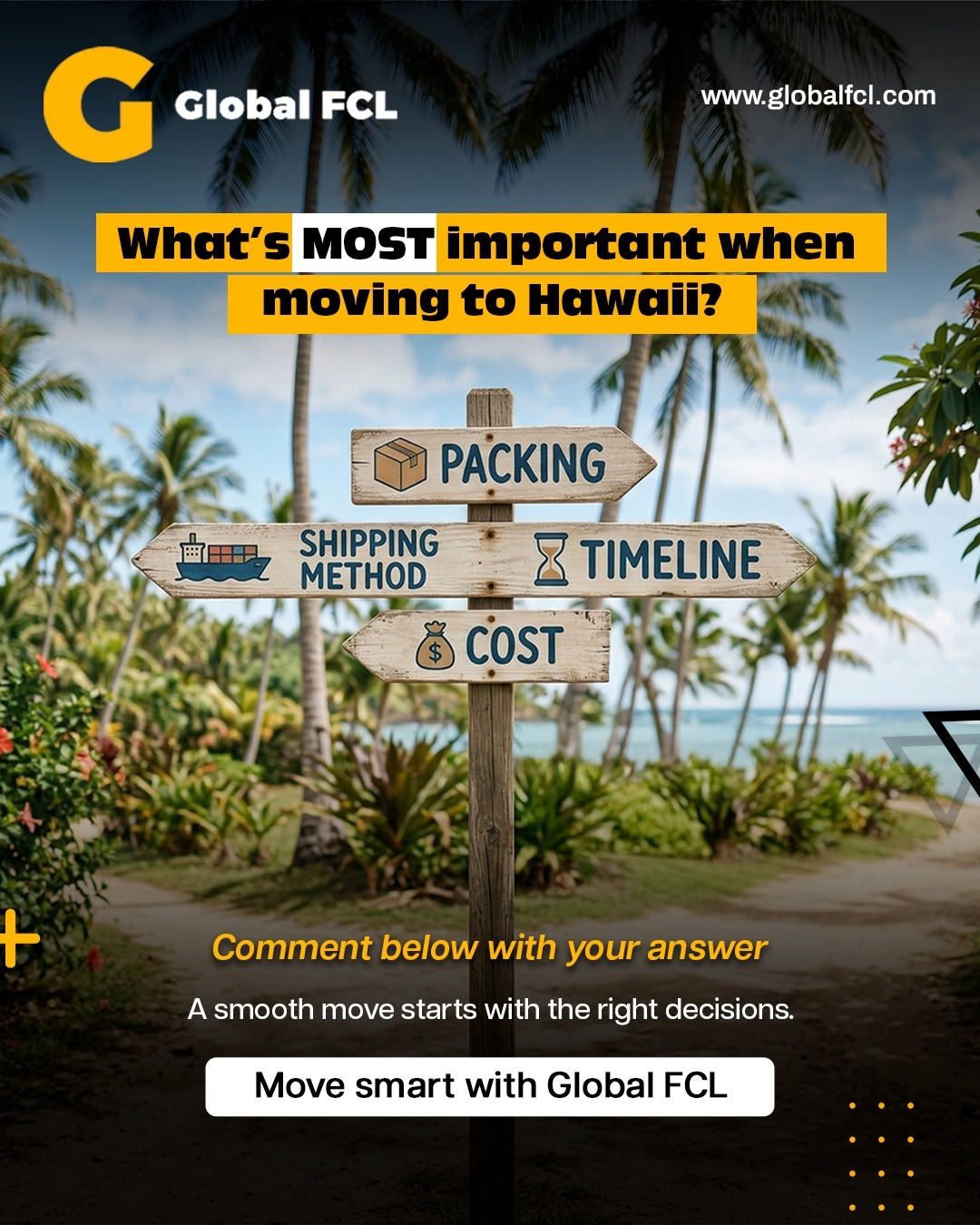
At first, moving from Japan to Hawaii may seem easy, but it actually entails a lot more than just sending your things over the ocean.
Based on what we’ve seen, a lot of customers don’t realize how complicated overseas shipping may be, especially when it comes to paperwork, rules, and timing. Because of this, things often go wrong at the last minute, cost more than intended, or take longer than planned.
Based on real-world experience, this book will tell you what really important when migrating from Japan to Hawaii.
The Key Differences Between Domestic and International Moves
One of the most common misunderstandings is assuming that international moving works the same way as domestic relocation.
In reality:
- In some cases, duties or taxes may apply—even for personal household goods
- Documentation accuracy is critical
- Shipping schedules depend on vessel availability
The most important factors are documentation and timing
Common Mistakes People Make
From our experience, these are the most frequent issues:
1. Incomplete or incorrect documentation
If documentation does not meet the required conditions, your shipment may be treated as commercial cargo instead of personal household goods—resulting in additional duties and taxes.
Even small errors can delay customs clearance by several days.
It is essential to confirm whether your shipment qualifies for duty-free entry in advance
2. Including restricted items
We often see delays caused by prohibited items such as food, plants, or organic materials.
Hawaii has particularly strict agricultural inspection regulations
3. Not planning around vessel schedules
Ocean freight does not operate daily like domestic transport. Missing a vessel can delay your shipment by 1–2 weeks.
4. Issues with self-packing
While self-packing is possible, insufficient or unclear inventory lists can create problems during customs clearance.
A detailed packing list is required for international shipments
What You Should (and Shouldn’t) Ship
Many people initially plan to ship everything, but in reality, it is important to make decisions based on cost and regulations.
Items that require special attention include:
- Food (especially meat, fruits, and vegetables)
- Plants and soil
- Hazardous materials
- Regulated or restricted items
If you are unsure, it is strongly recommended to confirm before packing
Duty-Free (Tax Exemption) – What You Need to Know
To qualify for duty-free treatment as household goods, certain conditions must be met.
In general, things must be personal stuff that you use every day. Duties may apply to objects that have not been used or that were just bought.
In practice, a common rule of thumb is that objects should have been utilized for a specific amount of time. This isn’t a hard and fast rule, though. The ultimate decision is based on how the item is really used and the person’s situation.
You may also need to show proof of your relocation status, like your visa or residency.
If these standards aren’t followed, your package can be considered as commercial cargo and have to pay duties.
We strongly suggest that you check your eligibility ahead of time.
One of the most common questions is:
“How much does it cost to move from Japan to Hawaii?”
The answer depends on several factors:
- Shipment volume
- Service level
- Origin and destination conditions
Common shipping methods include:
- LCL (shared container) → for smaller shipments
- FCL (full container) → for larger households
- Air freight → for urgent items (higher cost)
In many cases, cost differences come not from the ocean freight itself, but from:
- Storage
- Additional handling
- Delivery conditions
How Long Does Shipping Take?
Typical transit time:
Approximately 2 to 5 weeks (ocean freight)
However, actual timelines may vary depending on:
- Vessel schedules and routes
- Port congestion
- Inspection timing
- Weather conditions
Most delays are caused not by transit time itself, but by scheduling mismatches and clearance processes
Documents That Often Cause Delays
The following documents are typically required:
- Passport copy
- Visa or legal residency status
- Detailed packing list
- CBP Form 3299
Practical Advice Based on Real Shipments
From our experience, these steps can help ensure a smooth move:
- Start planning earlier than you think
- Double-check all documentation in advance
- Avoid restricted items entirely
- Align your move with vessel schedules
Most problems can be prevented with proper preparation
Final Thoughts
Moving from Japan to Hawaii is not just about transportation—it requires coordination, timing, and a clear understanding of international logistics.
With the right preparation and support, the process can be smooth and predictable.
At Global FCL, we provide relocation services from Japan to Hawaii based on real operational experience.
If you are planning your move, feel free to contact us for a personalized consultation.
